|



A
new device to reduce the pain of rsi - check it out!

What is RSI?
The short answer! .. with no medical terms.
Repetitive strain injury (RSI) is an umbrella term used to cover a wide range (15+) of separate conditions, listed on the
medical conditions page and below, that can be associated with repetitive tasks. In the majority of cases, RSI causes a nagging or extreme pain in your wrist, arm, shoulder and back. So if you have RSI it might cause pain in any one, or all of these parts of the body.
It can come on quite suddenly, 'out of the blue' or gradually increase over a long period. If you continue with your activities and posture it will get worse and worse.
It may get so bad that you aren't able to do routine work or household activities. The pain may get so bad that it's there all the time, even when you're resting.
If it's not treated reasonably quickly, in some cases the symptoms may become irreversible.
When you first notice symptoms of RSI, you have probably already done substantial damage to yourself. RSI can take months, even years to develop, and you can expect it to take at least twice as long to heal.
A
new device to reduce the pain of rsi - check it out!
This
is a mechanical device to relieve the pain of repetitive strain injury in
the muscles, joints and tendons, of the human arm, shoulder and back,
principally when using a computer. It may also assist people with Brachial
Plexus Injuries.
The
inventor of the device outlined here suffered tremendous pain in his arm
and wrist whilst using a computer in his daily work, and was concerned he
would not be able to continue. This was very serious because the use of a
computer was essential to his occupation. He invented the following device
to reduce the pain.
Repetitive
Strain Injury can occur as an
acute pain in the muscles of the wrist, arm, shoulder and back, caused by
using the arm for a repetitive activity under conditions with which the
arm is not familiar. An example of this is using a computer mouse or
keyboard for long periods.
The
device is based a rough prototype which proved the efficacy but was not
suitable for consumer use. The design shown here will need prototyping and
clinical testing.
The
concept has been checked by the relevant medical professionals. This was
done by a local company, based in Bath, called Designability (Bath
Institute of Medical Engineering)
See a brief extract from an email from them below …..
Dear David.
I have now had a chance to review this with Nina Evans, Research
Occupational
Therapist and Tony Husband, Commercial Director at Designability. The
principle behind the idea is credible and we understand the potential
benefits. Well done. Keir Haines. Senior Product Designer.
Therapist feedback
summary:
-
It is agreed that the principle of ....(full details removed to avoid
concept theft)..... can reduce strain on the injury and provide comfort
and potentially reduce pain.
- The concept of ....(full details removed to avoid concept
theft)..... is a nice idea.
A company was contacted which
supplies medical devices of this type and the response was:
Thank
you for the information about your new product.
I think the idea is brilliant and I am sure the potential for sales would
be extremely high. However as I have explained to you on the telephone as
a small family business we do not feel we are in a position to fully
maximize the potential of this excellent idea. My experience of being in
the profession for over thirty years leads me to believe that this has a
very high chance of being a viable and very profitable product. I would be
inclined to seek a large manufacturer of soft good medical products to
help you with this project.
May I wish you every success in the future.
Best regards
John Mines, Managing Director, JPM Products Limited,
view
more info on the desktop site
If
you would like updates on the progress of this new device
to reduce the pain of RSI, please express your interest in our
contact form don't worry you won't be bombarded with spam! We will
just send you a progress report.
What are the Symptoms?
- Tightness, discomfort, stiffness, soreness or burning in the hands, wrists, fingers, forearms, or elbows.
- Tingling, coldness, or numbness in the hands.
- Clumsiness or loss of strength and coordination in the hands.
- Pain that wakes you up at night.
- Feeling a need to massage your hands, wrists, and arms.
- Pain in the upper back, shoulders, or neck associated with using the computer.
Who
Suffers?
You
are not alone! the problem is massive.
- Computer
users.
- Gamers .. a huge problem for the
future..
- Machinery and power tool users.
- Sports men and women.
- Manual labourers.
This condition first hit the
news about 15+ years ago when it was called Repetitive Strain Syndrome.
As it was reasonably new, and related to computer use, it
was a hot topic. Now, it doesn't get into the headlines because
it's a widely understood problem, but it's still just as common, if
not more so.
2.9 million days were lost
due to work related upper limb or neck disorders 2010/11, in the
UK, there are no NICE guidelines or approved treatments for
those disorders which are undiagnosed and labelled ‘diffuse
RSI’.
Causes .
It's usually associated with doing a particular activity repeatedly or for a long period of time. It often occurs in people who work with computers or carry out repetitive manual work with poor posture or activities that require you to work in an awkward position, or playing certain sports.
There are a number of things that can increase your risk of developing RSI. These include:
Repetitive activities doing an activity that involves force, such as lifting or carrying heavy objects.
Repetitive activities which are lightweight, but which subject muscles to strain they are not used to, such as suspending the hand and arm upwards, for long periods, for computer keyboard or mouse use.
Carrying out an activity for a long period of time without adequate rest periods and poor posture.
Activities that require you to work in awkward or tiring positions, and/or using vibrating equipment.
What are the treatments.
Due to the large number of separate medical conditions which can cause this type of pain
(see medical conditions page), it's quite hard to diagnose. However, although the problems occur in different parts of the anatomy, under different conditions, the treatments are similar.
- Stopping the activity which caused the problem in the first place.
- Exercises to relax and assist the recovery of muscles, tendons and ligaments.
- Prescriptions of anti-inflammatory drugs and pain killers. Sometimes Steroids.
- In extreme cases surgery may be necessary.
More
info on the desktop pages>>
About
this website.
Hi, my name is David and I use a
computer a lot in the course of my work, IT, media production and website design (including this one!)
I'm not medically trained but I
decided to assemble the essence of RSI into one place to help
other RSI sufferers. I've also invented a device which
might be a great help to alleviate the pain of RSI under some
conditions (not all!). This will be outlined later.
A few years ago I developed
extreme pain in my upper arm, shoulder and back while working on
some websites. I'd been sitting in the same position, at the
same desk, using the same computer keyboard and mouse, for at
least 2 years, without any problems at all.
So I was surprised to
experience this pain as I didn't seem to be doing anything
different, so why had it suddenly started?
The pain was so intense I
couldn't use my computer which was very worrying because I'm
self employed and if I don't work, I don't earn any money.
I researched all around the
Internet and could find no information to lead me to any
conclusions as to why this problem suddenly started, apart from
a lot of other people with the same condition. Also I could not
find any real cure or solution to the problem.
This went on for some time. I
had to do small amounts of work, and take a lot of rest periods.
I went to see my GP and a Physiotherapist, but neither could
suggest any solutions apart some partial remedies which might or
might not work with some types of RSI.
Being a bit of an inventor,
knowing a bit about the human anatomy, and being an amateur designer
and engineer, I decided to test out a theory regarding the cause
and possible solution to my problem.
Over a couple of months I tried
out my theory. If I used the device
the pain went away, and if I didn't use it, the pain came back
.... simple as that, black and white, pain on .. pain off. I
must emphasise that this device is principally intended for
computer users, and won't help with all types of RSI.
I continued to use it for
several months, still gradually perfecting the way it worked.
Eventually the pain went away almost completely. I still get
minor attacks of the pain if I spend too much time on my
computer but now know how to deal with it, and it is no longer a
particular problem.
More
info on the desktop pages>>
Solutions
to the RSI problem?
The short answer!
..
Stop whatever physical
activities you are doing, and do something completely
different!!..
However, of course, for most
people this is impossible, sufferers need to continue with their
work, their lifestyle, their sport, etc etc.
Interestingly, although the
problems occur in different parts of the anatomy, under
different conditions, the treatments are similar.
- Stopping the activity which
caused the problem in the first place.
- Exercises to relax and assist
the recovery of muscles, tendons and ligaments.
- Prescriptions of
anti-inflammatory drugs and pain killers. Sometimes Steroids.
- In extreme cases surgery may
be necessary.
The longer answer!
..
So what's the best thing to
do?
You need to
change your posture completely, the way you sit or work, the
time you spend working, take breaks, and do exercises....
-
Take regular breaks from the repetitive task that you are undertaking. If you are computer based, you could set yourself reminders to take breaks at regular intervals.
- Reminders can usually be setup using your email client or alternatively there are various forms of specific RSI software that is designed for this job
Regularly stand up and stretch as well as stretching your arms and wrists and also straighten your fingers.
- If you are office based try to look at objects in the distance occasionally rather than continuously starring at a computer screen.
- It is important that you listen to your body. If you feel fatigued, take a break before you begin to experience any RSI symptoms.
- Learn muscle relaxing breathing techniques such as diaphragmatic breathing.
- Try to keep in as good physical shape as possible and eat and drink healthily.
- Do not smoke as smoking can adversely affect blood flow.
Tips to prevent RSI in the office workplace.
- It is not only in your employers interests to attempt to prevent repetitive strain injuries amongst staff, but it is also a legislatory requirement in many countries.
- Your employer should have guidelines for the prevention of RSI injuries in the office – here is our list of RSI do’s and don’ts in the office environment.
- Ensure that your workstation is ergonomically sound. This will involve adjusting the height of your chair so that it is relative to the desk and so that you have lumbar support.
- When seated attempt to retain a good posture (no slouching!) Ideally your head and back should form a straight line from your ears to your pelvis
When typing you wrists should not be bent to one side, try to keep them pointing in a straight line with your forearm.
- Try not to hit the keys on your keyboard too forcefully and
learn to touch type if possible. This will involve using all of your fingers which will lessen the load of typing across all fingers and it will eradicate the need for having to constantly focus on your keyboard.
- Do not grip the computer mouse tightly and have it located close to your keyboard so you do not need to stretch.
- An option maybe to consider a trial of voice recognition software to cut down or even eradicate the need for typing entirely.
- Ensure that the office is heated appropriately
If you use the telephone regularly you should obtain a headset rather than attempting to balance the headset between your ear and shoulder whilst typing.
More
info on the desktop pages>>
Associated
medical conditions.
Shown
below are medical
conditions which are sometimes included under the term RSI
prior to a more accurate diagnosis being confirmed. The
information below is not intended to provide instruction and you should not rely on this information to determine diagnosis, prognosis or a course of treatment. It should not be used in place of a professional consultation with a doctor.
Simplistically, most of the
medical conditions below cause pain in the hand, wrist, arm or
shoulder, and are caused by overuse of parts of the anatomy, or
repetitive use of the same parts over a long period.
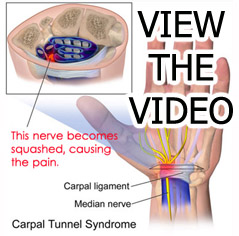
- Carpel
Tunnel Syndrome
The
video below shows a dissection of an actual human arm and wrist.
This is the clearest way of showing how the muscles in the lower
arm and wrist function, and how Carpel Tunnel pain originates.
- Edema.
- Tendinitis.
- Tendinosis.
- Cubital tunnel syndrome.
- De Quervain syndrome, Tenosynovitis.
- Thoracic outlet syndrome.
- Intersection syndrome.
- Golfer's elbow (medial epicondylitis).
- Tennis elbow (lateral epicondylitis).
- Trigger finger (so-called stenosing tenosynovitis).
- Radial tunnel syndrome.
- Focal dystonia.
- Bursitis.
- Thoracic Outlet Syndrome.
- Myofascial Pain Syndrome.
More
info
on the desktop pages>>
Useful
tips from other RSI sufferers
Gamers I have been dealing with several
forms of RSI, that is, Repetitive Stress Injury which is a type of
injury most serious gamers will probably encounter in some form,
even if it's only a light discomfort. During the course of my
recovery, I have done a great deal of research and study on what
can be done to heal these types of injuries.
I had to personally develop a plan for myself to try to get on
track to recover fully for the release of Starcraft 2, and so far
things are going well enough for me to try to write this up, so I
would greatly like to share the information with anyone......
More
info
on the desktop pages>>
Employees
rights
As
an employee, when you first begin to experience symptoms due to RSI you will
be unsure of what is happening to you. The symptoms initially can be quite mild twinges with a bit of numbness or tingling. However as the condition develops the pain increases until it is with
you for 24 hours, leading to weeks on end of pain and disability, reality sets in, usually confirmed by doctor’s diagnosis.
Difficulties
During this time, difficulty occurs in carrying out workplace tasks, domestic tasks, any hand-orientated hobbies have to be given up (sport, crafts etc.). Being off work on long-term sickness absence results in reduced salary, financial worry and stress fear of job loss, leading to depression, which in turn exacerbates pain levels, and the downward spiral of ill health begins.
Taking Action
Employees have a responsibility to report their injury once they realise what is happening, record the pain in the
(accident book), and pursue accurate diagnosis and treatment.
You must also ask for a risk assessment to be carried out at work, and plan
your home life by obtaining help from friends and family, if possible, to reduce the strain on
your hands and arms. RSI must not be ignored, you can’t wish it away, and you must get treatment and adjust your life to the condition.
Taking Action
It is important to note that working over the pain can cause further damage, the more chronic the condition the longer it takes to make a recovery, therefore the correct balance must be found.
Consultation
Your workstation needs to be observed and measurements taken, as well as posture being assessed, talking to
you about any problems with equipment and posture, and about the volume of work
must be undertaken.
Back to Work
Consideration should be given to your physical and mental state
when embarking on a gradual return to work, with shorter hours increasing gradually. This rehabilitative approach means that some of
your work is being done, and your valued skills can be retained.
This may indicate a need for sickness absence policies to be rewritten, taking into account state benefits and salary payment.
Communication
Make sure “open channels” are established between yourself, line
managers, senior management, occupational health professionals, and human resources
officers. Each one of these has an important role to play, together with a helpful and supportive attitude from colleagues.
If trades union membership is established within your organisation learn from trades union safety representatives. A unionised workplace is a healthy
workplace. Be aware of the dangers and educate yourself to
achieve a positive health and safety culture within your
employers business.
Who Can Help
There are many organisations that are able to help in this day and age. The Department of Work and Pensions’ Disabilities Adviser can arrange for the provision of an ergonomic assessment and equipment, and funding to pay for a support worker to assist the injured person. A wealth of advice is available from the Health and Safety Executive, and various web sites on the Internet. RSI help-lines are for people with
RSI, their families and also for employers.
Costs to you, the employee
RSI and other long-term medical conditions can be an expensive business.
Costs to yourself include lost salary, medication and medical treatment expenses, and travel costs whilst obtaining treatment. In the event of a long-term illness people can lose their car, their home, and suffer breakdown of family relationships caused by the stress of their illness, leading to a downward spiral into poverty.
More
info
on the desktop pages>>
Employers,
what are your responsibilities.
What can happen to your employees ?
When people first begin to experience symptoms due to RSI they are unsure of what is happening to them. The symptoms initially can be quite mild twinges with a bit of numbness or tingling. However as the condition develops the pain increases until it is with the person for 24 hours, leading to weeks on end of pain and disability, reality sets in, usually confirmed by doctor’s diagnosis.
The Employer
In the event of Repetitive Strain Injury symptoms being experienced, there are various strategies that need to be implemented. Reasons for ignoring RSI can include fear of disclosure and keeping the accident book “tidy”, seeking to avoid potential litigation, embarrassment and guilt at having caused someone to become ill, which affects the image of the company, annoyance and irritation because targets are not being met, thereby inviting criticism from a higher tier of management.
Acknowledge the Situation
Employers should be unafraid to admit there is a problem, as ignoring RSI does not make it go away but makes things worse. Evidence of good practice within the workplace could be a way of keeping down insurance premiums. Certainly frequent legal claims are one way of increasing insurance premiums.
Taking Action
Encourage workers to report pain and record it. Body mapping is a useful tool showing where pain and inflammation are occurring. Encouraging the worker to seek effective diagnosis and treatment, pursue a pain management
programme,
and consider alternative therapies, is the way forward.
It is important to note that working over the pain can cause further damage, the more chronic the condition the longer it takes to make a recovery, therefore the correct balance must be found.
Consultation
Conduct an effective risk assessment in consultation with the worker, looking at equipment, workload and stress. Just issuing a questionnaire to the worker is a useless exercise. The workstation needs to be observed and measurements taken, as well as posture being assessed, talking to the worker about any problems with equipment and posture, and about the volume of work expected to be undertaken.
Back to Work
When someone is on the road to recovery it can be conducive to their physical and mental state to embark on a gradual return to work, with shorter hours increasing gradually. This rehabilitative approach means that some of their work is being done, a valued and knowledgeable employee can be retained, and there is some financial benefit to both employer and employee. This may indicate a need for sickness absence policies to be rewritten, taking into account state benefits and salary payment.
Communication
Encourage “open channels” between worker, line manager, senior management, occupational health professionals, and human resources officer. Each one of these has an important role to play, together with a helpful and supportive attitude from colleagues.
If trades union membership is established within your organisation learn from trades union safety representatives. A unionised workplace is a healthy workplace, a healthy workplace saves money. Be aware of the dangers and educate yourself and your staff by encouraging a positive health and safety culture within the
organisation.
Who Can Help
There are many organisations that are able to help in this day and age. The Department of Work and Pensions’ Disabilities Adviser can arrange for the provision of an ergonomic assessment and equipment, and funding to pay for a support worker to assist the injured person. A wealth of advice is available from the Health and Safety Executive, and various web sites on the Internet. RSI help-lines are for people with
RSI, their families and also for employers.
Costs to the Employer
Costs to the employer include lost salary, lost productivity via absence of a knowledgeable employee, additional salary costs for temporary employees, legal and medical specialist fees in the event of litigation, and increased insurance premiums caused by litigation.
More
info
on the desktop pages>>
Gamers
watch out!
Korean
gamers serious injuries.
Lee Young-ho
(beloe) is the best player in StarCraft and has won everything in this
field.

Repetitive strain had injured Mr Lee's muscles, deforming them and making surgery the only option to save his illustrious
career.
Gaming in South Korea
has reached a dangerous place, where professionals and amateurs alike are destroying their lives and their bodies.
Smash Bros. designer's arm injury sounds like it's getting worse.
Masahiro
Sakurai (below) is a Japanese video game director,
designer, and writer, best known as the creator of the Kirby and
Super Smash Bros. series.

Apart from his work in those series,
he also directed Meteos in 2005 and Kid Icarus: Uprising in 2012.
Development on the Super Smash Bros. game for Wii U and 3DS has
taken a physical toll on director Masahiro Sakurai. After revealing last year that he's suffering from calcific tendinitis and muscle ruptures in his right shoulder (which is affecting his right arm), he has now spoken out to say this condition is now affecting his left arm as well.
"The tendon sheath inflammation symptoms in my left forearm are especially hard to deal
with", Sakurai said. "I've been moving the controller as gently as
possible".
What specific impact Sakurai's arm injury has on the development of the
Super Smash Bros. game remains to be seen, but it could be serious. Sakurai said
that, "If this disorder lingers, or if it never gets fixed, there's no telling what impact that would have on the project."
Sakurai is the director on the Super Smash Bros. game, meaning he presumably tests the project on a regular basis. As fans of the series know, Smash Bros. requires fairly advanced hand/finger motions, which are likely problematic for Sakurai considering his injury.
More
info
on the desktop pages>>
Young
people / kids at risk
This is intended as a brief guide for young people, to make them aware that using computers with a keyboard and mouse,
playing on games consoles, and texting on mobile phones can cause repetitive strain injuries.
Read the equipment instruction manual – play hunt the RSI warning, it’s usually in very small print. Children as young as seven have been known to develop Diffuse
RSI. Some students taking GCSEs and A-levels cannot write their own exam papers due to
RSI, and have to rely upon dictating answers to teachers.
It is quite common for students at university to find that writing their dissertation results in chronic RSI.Repetitive Strain Injury
(RSI) is a general term covering a variety of medical conditions which happen due to over-strain, such as writer’s cramp or
tendonitis.
Repetitive action is when you do the same movement over and over again, for long periods of time, when it causes first of all strain, and then injury. Which is why we call it Repetitive Strain Injury.
It is similar to a sports injury, so if for instance, while running and your leg was sprained, you wouldn’t run on it until it was better and the pain went away, and the muscles had recovered from the injury.
Similar things can happen with your hands and arms, so be careful not to over use them in the same old way if they feel “sprained” it is important to rest them and seek treatment.
The combination of repetitive movements, poor posture, and over use of computers, games consoles and mobile phone
texting/games-playing, without taking rest breaks, can cause injury to the nerves, muscles and tendons, in the fingers, hands, wrists, arms, elbows, shoulders, and neck, which if ignored, may lead to long-term damage.
Bad habits in the way you sit, use or misuse your body, or don’t exercise, can cause problems, as you get older. Be aware and listen to what your body is saying – a whisper is a warning to take care – a shout is a definite cry for help because of damage done already.
Never, ever, ignore these symptoms as long-term damage can happen.
Be very aware of stiffness, sharp pain or dull ache, numbness or tingling, or poor grip, which may come on after a heavy session on the computer using either the keyboard or the mouse, or when using a pen, or with thumb movements when using a Games Console, or when texting on a mobile phone.
Try to take breaks between hand activities, of a few minutes each half-hour or ten minutes each hour. Massage your hands and arms to restore the circulation and refresh the muscles and tendons. Flex your fingers, and stretch your arms out to the side, above your head, then to your sides, keeping your spine straight. This applies at home or at school – if possible.
Do warm up exercises – the same as when you do before. Gentle exercise can only help.
Checklist at the Computer.
 Be aware that laptop computers force you into a hunched position and force the hands into a claw like position.
Check your body position – straighten up and flex and move – try not to get “lost in time and space” for hours on end.
Don’t sprawl in the chair, or twist your spine, or crane your neck
Is your chair height adjustable and is the back support adjustable?
Is the desk or table height suitable and comfortable, is there enough space for your legs under the desk?
Do you need a footrest?
Is the monitor at the proper viewing distance for you (usually 60cm from your eyes)?
Is the monitor straight in front of you (correct), instead of off to the side (incorrect)?
Is it positioned to avoid glare/reflection?
Is there enough desk space for the keyboard and space for your hands and forearms to rest, while you check your work?
Do you use a paper holder or is there enough space for your work papers?
Is there enough desk space for you to use the mouse in the central position, or to change hands, to avoid developing “mouse arm” (stiffness, numbness and pain) caused by holding one arm rigidly out to one side and clutching the mouse in a claw-like position.
Checklist for Games Consoles.
When using a games console do you sit hunched over it with your head tilted back gazing at the screen? And are your hands and arms rigid with the thumbs/ fingers moving at speed?
Take a break and move around to give your hands, arms, neck, shoulders, and your eyes a change of scene.
More
info
on the desktop pages>>
|